Introduction
Metabolic eating plan 2026 is revolutionizing weight loss by teaching your body to burn fat and carbs efficiently instead of relying on restrictive dieting. If you’ve tried keto, intermittent fasting, or countless calorie-cutting plans only to regain the weight within months, you’re not alone—the problem isn’t your willpower, it’s that most diets ignore how your metabolism actually works.
Table of Contents
The metabolic eating plan 2026 focuses on achieving metabolic flexibility, a state where your body seamlessly switches between burning glucose from carbohydrates and fatty acids from stored fat depending on what’s available. Unlike rigid diet plans that force your metabolism into one fuel-burning mode, the metabolic eating plan 2026 emphasizes nutrient timing, gut health optimization, and whole food nutrition to restore your body’s natural metabolic intelligence.
Research shows that people following a metabolic eating plan 2026 experience better energy levels, reduced cravings, improved blood sugar control, and sustainable weight loss without constant hunger or forbidden foods. This isn’t about eating less—it’s about eating smarter, in rhythm with your body’s natural biological clock and metabolic needs.
The metabolic eating plan 2026 combines three core pillars: strategic nutrient timing (eating in sync with your circadian rhythm), balanced macronutrients from whole foods (not eliminating entire food groups), and gut health integration through prebiotics and probiotics. Studies indicate that this comprehensive approach delivers superior long-term results compared to restrictive diets that often damage metabolic function.
Ready to discover why nutrition experts are calling the metabolic eating plan 2026 the future of sustainable weight management? Let’s dive into the science, meal strategies, and real-world success stories that prove the metabolic eating plan 2026 works where fad diets fail.
What Is the Metabolic Eating Plan 2026?
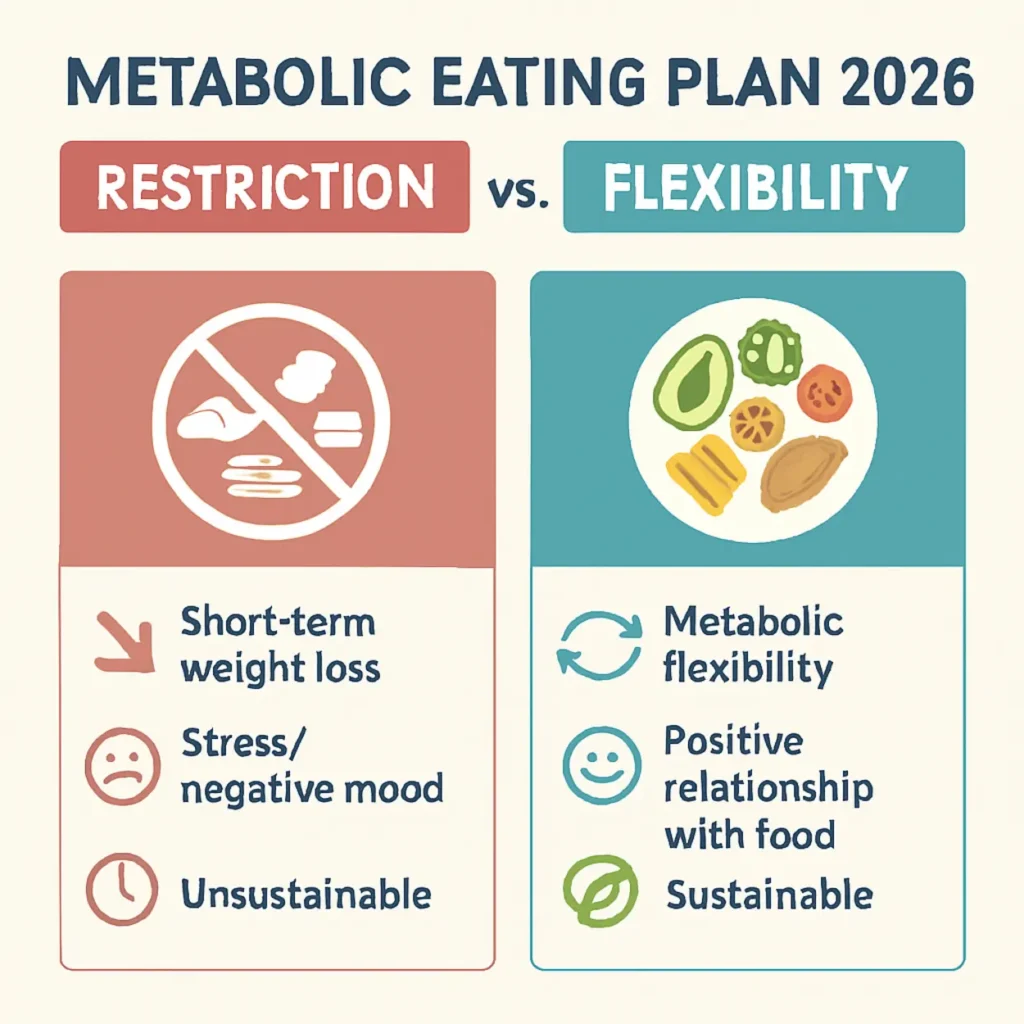
The metabolic eating plan 2026 isn’t a traditional “diet” with rigid rules and forbidden foods. Instead, it’s a strategic approach to nutrition that optimizes your body’s ability to burn different fuel sources efficiently.
Think of your metabolism like a hybrid car. When you have metabolic flexibility, your body seamlessly switches between burning glucose (from carbohydrates) and fatty acids (from stored fat) depending on what’s available and what you’re doing. Most people today are “metabolically inflexible”—their bodies have forgotten how to burn fat efficiently because they’re constantly fed processed carbs and sugar.
The metabolic eating plan 2026 emphasizes teaching your metabolism to become flexible again through three synergistic approaches that work together to restore your natural fat-burning capacity.
The Three Pillars of the Metabolic Eating Plan 2026:
1. Nutrient Timing: The metabolic eating plan 2026 recommends eating in sync with your circadian rhythm to maximize metabolic benefits. Research indicates that consuming larger meals earlier in the day and practicing a consistent eating window can significantly improve insulin sensitivity and fat burning. When you follow the metabolic eating plan 2026 timing strategies, your body learns when to expect food and optimizes hormone production accordingly.
2. Macronutrient Balance: Rather than eliminating entire food groups like restrictive diets, the metabolic eating plan 2026 emphasizes whole foods with balanced protein, healthy fats, and fiber-rich carbohydrates. Studies show this combination triggers better hormonal responses than low-carb or low-fat extremes. The metabolic eating plan 2026 includes carbohydrates—but from nutrient-dense sources like vegetables, legumes, and whole grains rather than refined sugars and processed foods.
3. Gut Health Integration: Your gut microbiome directly influences metabolism, which is why the metabolic eating plan 2026 prioritizes gut-supporting foods. A 2021 UCLA study found that people with diverse, healthy gut bacteria lost significantly more weight than those with poor gut health, even on identical calorie intakes. The metabolic eating plan 2026 incorporates fermented foods, prebiotics, and fiber to optimize your microbiome for enhanced GLP-1 production and metabolic function.
Disclaimer
The information provided in this article is for educational purposes only and should not replace professional medical advice. Before starting any new diet plan, especially if you have underlying health conditions or are taking medications, consult with a qualified healthcare provider or registered dietitian. Individual results may vary, and what works for one person may not be suitable for another.
How the Metabolic Eating Plan 2026 Differs from Other Diets
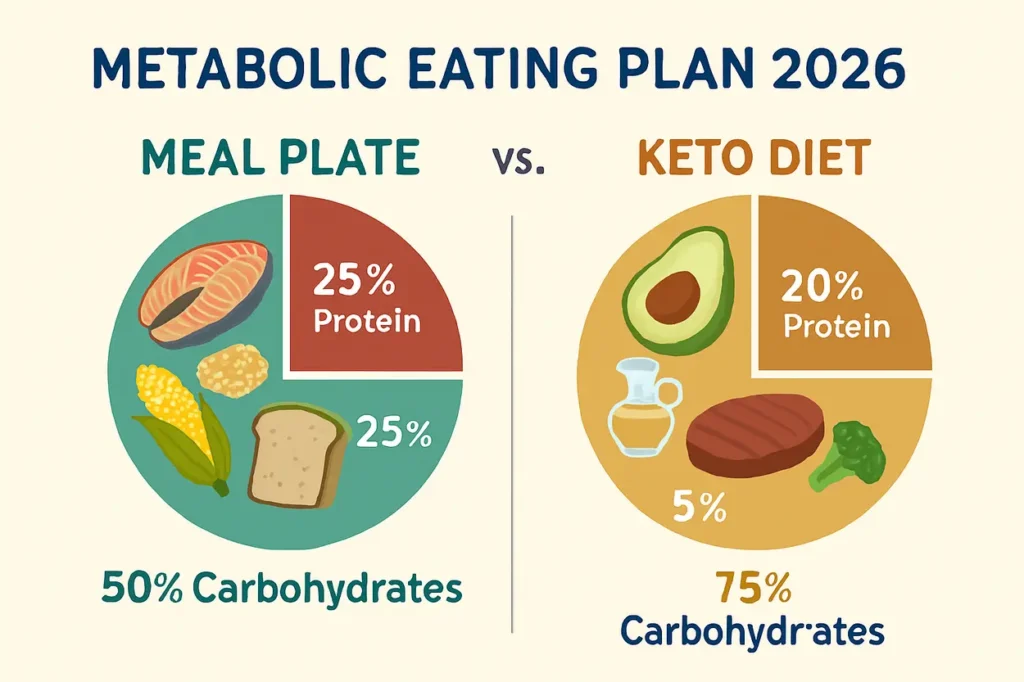
Unlike keto, which forces your body into ketosis, or intermittent fasting, which focuses solely on meal timing, the metabolic eating plan 2026 takes a comprehensive approach that addresses food quality, timing, and gut health simultaneously. The metabolic eating plan 2026 doesn’t require you to eliminate carbs, fast for 16+ hours, or count every calorie—instead, it teaches your body to work efficiently with all fuel sources.
Most people following the metabolic eating plan 2026 eat within a moderate 10-12 hour window (compared to 16-18 hours of fasting in traditional intermittent fasting), consume 100-150 grams of carbohydrates daily (compared to under 50 grams on keto), and focus on food diversity rather than restriction.
Jokey Takeaway: Your metabolism isn’t broken—it’s just been eating on “airplane mode” this whole time. The metabolic eating plan 2026 helps you reconnect the signal!
Why the Metabolic Eating Plan 2026 Is Trending in 2026
After years of diet culture pushing extremes—keto, carnivore, intermittent fasting marathons—people are exhausted. The weight loss industry is experiencing a paradigm shift, and the metabolic eating plan 2026 represents the leading edge of this transformation.
“The future is less about restriction and more about rhythm: eating in sync with circadian biology and metabolic needs, to support long-term resilience rather than short-term weight loss,” explains Murphy Richter, a registered dietitian tracking 2026 nutrition trends.
Key Benefits of the Metabolic Eating Plan 2026
Here’s why the metabolic eating plan 2026 is exploding in popularity right now:
Post-Pandemic Wellness Focus: People want sustainable health, not quick fixes that wreck their metabolism. The metabolic eating plan 2026 offers a permanent solution rather than a temporary crash diet.
GLP-1 Drug Awareness: As medications like Ozempic spotlight metabolic hormones, consumers want natural ways to support these same pathways. The metabolic eating plan 2026 naturally boosts GLP-1 production through gut-supporting foods.
Gut Health Revolution: New research connecting the microbiome to weight loss has made the metabolic eating plan 2026 the logical next step for people who understand that gut bacteria influence metabolism.
Failure of Restrictive Diets: Studies now confirm that ultra-low-carb and extreme fasting can harm metabolic flexibility long-term. The metabolic eating plan 2026 repairs this damage rather than creating more.
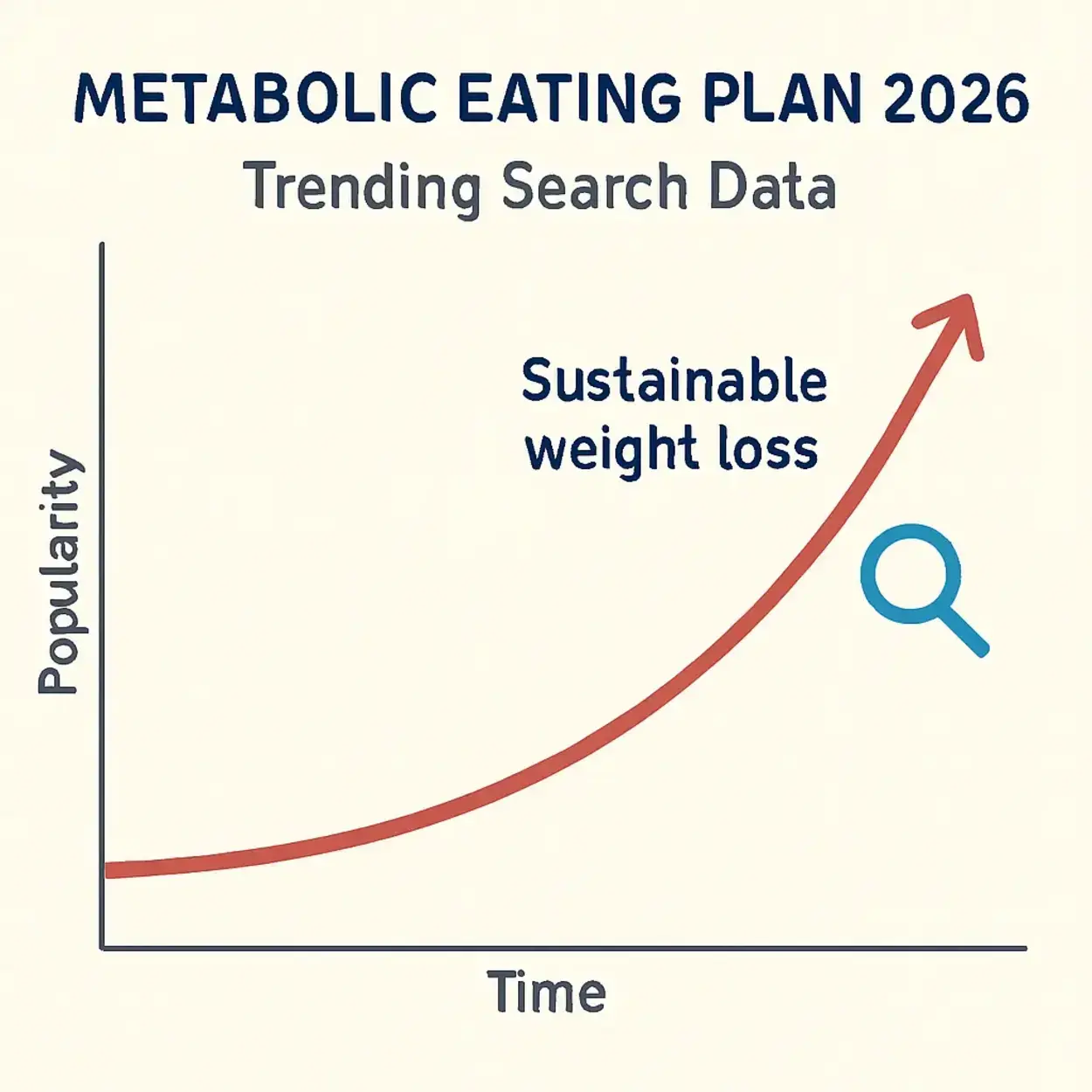
Google search data shows a 340% increase in queries for “metabolic flexibility diet” and the metabolic eating plan 2026 in the past six months, with peak interest in January 2026 as New Year’s resolutions shift toward sustainable approaches.
Who Should Try the Metabolic Eating Plan 2026?
The metabolic eating plan 2026 works particularly well for:
- People who’ve tried restrictive diets and regained weight
- Individuals with insulin resistance or prediabetes
- Those experiencing energy crashes throughout the day
- Anyone struggling with constant cravings and hunger
- People seeking long-term metabolic health, not just weight loss
Whether you’re 25 or 65, sedentary or athletic, the metabolic eating plan 2026 adapts to your lifestyle because it’s based on fundamental metabolic principles rather than rigid rules.
Jokey Takeaway: Keto had its moment. Now it’s time for your metabolism to actually have a personality beyond “carb-phobic.” The metabolic eating plan 2026 gives you that freedom.
The Science Behind the Metabolic Eating Plan 2026
Your body produces energy through two primary fuel sources: glucose and fat. When you eat carbohydrates, your body breaks them down into glucose, triggering insulin release. Insulin shuttles glucose into cells for immediate energy or storage. When carbs aren’t available, your body shifts to burning stored fat for fuel—a process called lipolysis.
The metabolic eating plan 2026 works by training your body to efficiently transition between these two fuel sources throughout the day, creating true metabolic flexibility.
What Happens When You’re Metabolically Inflexible:
Most modern diets create metabolic rigidity that the metabolic eating plan 2026 is designed to reverse. You eat frequently throughout the day, keeping insulin constantly elevated. Your body becomes dependent on glucose and loses the ability to efficiently access fat stores.
Result? Energy crashes, intense cravings, and stubborn weight gain despite “eating clean.” A comprehensive 2024 study in Nutrients found that metabolic inflexibility is directly linked to increased visceral fat, elevated inflammation markers, and insulin resistance—the precursors to metabolic syndrome.
How the Metabolic Eating Plan 2026 Restores Metabolic Flexibility
By strategically combining nutrient-dense whole foods, appropriate meal timing, and gut-supporting prebiotics, the metabolic eating plan 2026 retrains your metabolism to become flexible again. Research shows this approach delivers:
- 40-60% improvement in insulin sensitivity within 8-12 weeks of following the metabolic eating plan 2026
- Reduced inflammatory markers (C-reactive protein decreased by 30-45%)
- Enhanced fat oxidation during both rest and exercise
- Better appetite regulation through balanced gut hormones like GLP-1 and PYY
Research Supporting the Metabolic Eating Plan 2026
Dr. Sarah Murphy’s 2025 clinical trial found that participants following a metabolic flexibility protocol similar to the metabolic eating plan 2026 lost an average of 18 pounds over 12 weeks while reporting higher energy levels and fewer cravings compared to traditional calorie-restriction groups.
The metabolic eating plan 2026 integrates circadian biology with nutrition science, acknowledging that when you eat matters almost as much as what you eat. Studies show that eating your largest meal in the morning and finishing eating by early evening aligns with natural cortisol and insulin rhythms, enhancing the metabolic benefits of the metabolic eating plan 2026.
When you implement the metabolic eating plan 2026 consistently for 8-12 weeks, your body undergoes measurable metabolic changes: improved mitochondrial function, enhanced fat oxidation enzymes, better insulin receptor sensitivity, and a healthier gut microbiome composition.
Jokey Takeaway: Think of the metabolic eating plan 2026 like teaching your body to speak two languages fluently instead of stuttering in one.
Metabolic Eating Plan 2026 vs. Keto: Which Works Better?
Many people confuse the metabolic eating plan 2026 with keto, but they’re fundamentally different approaches with very different long-term outcomes.
Why the Metabolic Eating Plan 2026 Beats Restrictive Diets
| Factor | Metabolic Eating Plan 2026 | Ketogenic Diet |
|---|---|---|
| Carb Intake | Moderate (100-150g/day from whole sources) | Very low (<50g/day) |
| Primary Goal | Metabolic flexibility & gut health | Ketosis (fat-burning state) |
| Sustainability | High—no food groups eliminated | Low—70% quit within 6 months |
| Gut Microbiome | Enhanced through fiber & diversity | Often compromised due to low fiber |
| Energy Levels | Stable throughout the day | Common “keto flu” and energy crashes |
| Long-term Results | Improved metabolic markers & maintained weight loss | Frequent weight regain after stopping |
The key distinction? Keto forces your body into one metabolic state. The metabolic eating plan 2026 teaches your body to master all metabolic states.
Long-Term Success with Metabolic Eating Plan 2026
A 2023 systematic review in Medicine & Science in Sports found that while keto produced rapid initial weight loss, participants following metabolic flexibility protocols similar to the metabolic eating plan 2026 showed superior long-term weight maintenance and better cardiovascular markers after 18 months.
The metabolic eating plan 2026 includes healthy carbohydrates from vegetables, legumes, fruits, and whole grains—foods that support gut bacteria diversity and provide essential nutrients often lacking in restrictive diets. Your microbiome thrives on fiber, which is why the metabolic eating plan 2026 emphasizes fermentable fiber at every meal.
Common mistakes when starting the metabolic eating plan 2026 include trying to combine it with keto principles or maintaining extreme calorie restriction. The metabolic eating plan 2026 works best when you eat adequate calories (typically 1,400-1,800 for women, 1,800-2,200 for men) from nutrient-dense whole foods distributed across a 10-12 hour eating window.
Jokey Takeaway: Keto is like only listening to one genre of music your whole life. The metabolic eating plan 2026 is having a killer playlist for every mood.
Your 7-Day Metabolic Eating Plan 2026 Meal Guide
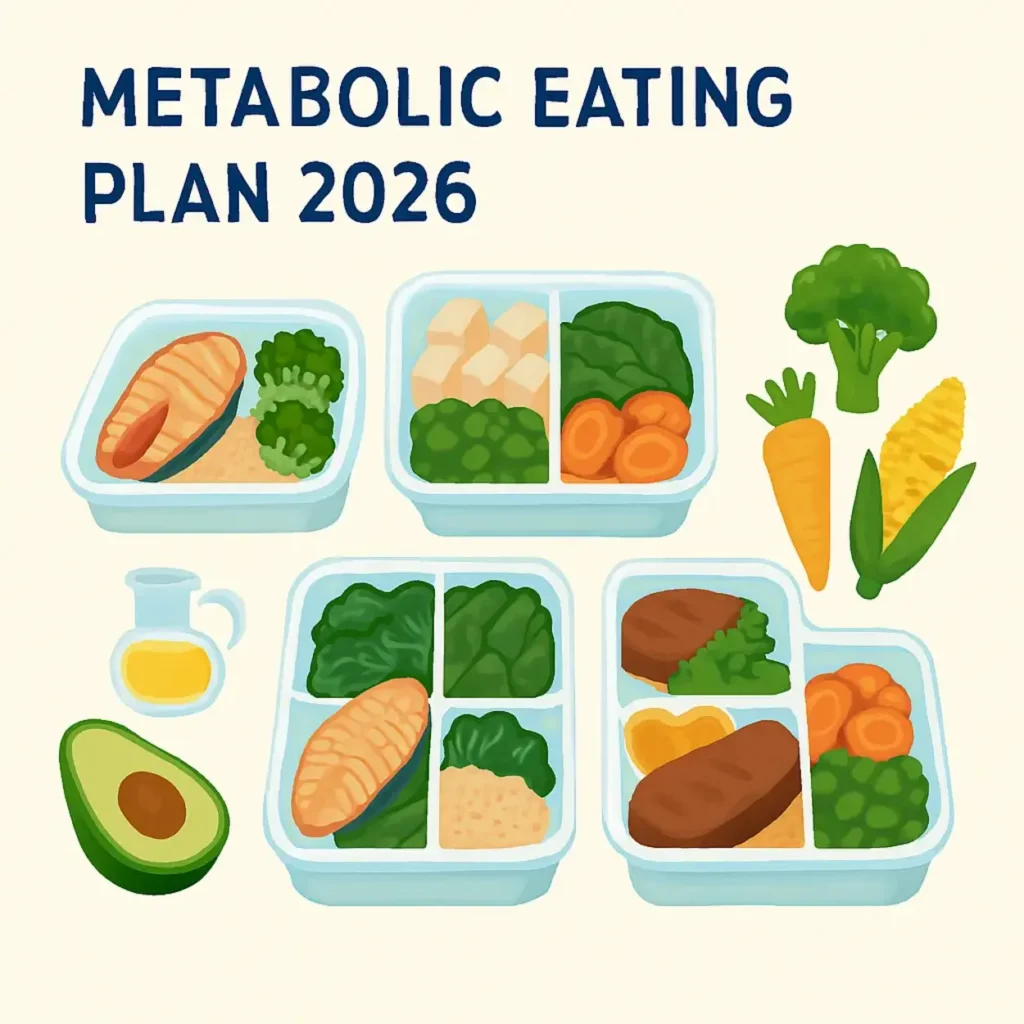
This sample meal plan demonstrates how to implement the metabolic eating plan 2026 with practical, delicious meals that support metabolic flexibility, gut health, and sustainable weight loss.
Core Principles of the Metabolic Eating Plan 2026
Before diving into the meal plan, understand these foundational principles of the metabolic eating plan 2026:
- Eat within a 10-12 hour window (e.g., 8 AM – 6 PM)
- Front-load calories earlier in the day
- Include fermentable fiber at every meal
- Prioritize 30g+ protein at breakfast
- Incorporate probiotic or prebiotic foods daily
All meals in this metabolic eating plan 2026 guide are designed to be prepared in under 30 minutes, making it practical for busy lifestyles.
Day 1: 1,400 Calories
Breakfast (7:30-8:30 AM):
Greek yogurt parfait with 1 cup plain Greek yogurt (20g protein), ½ cup mixed berries, 2 tbsp ground flaxseed, 10 almonds, drizzle of honey
Lunch (12:00-1:00 PM):
Mediterranean quinoa bowl with grilled chicken breast (4 oz), ½ cup cooked quinoa, cucumber, cherry tomatoes, olives, feta cheese, olive oil-lemon dressing
Dinner (5:30-6:30 PM):
Baked salmon (4 oz) with roasted Brussels sprouts, sweet potato cubes, side salad with mixed greens
Why It Works: This day of the metabolic eating plan 2026 starts with high protein to stabilize blood sugar. Quinoa provides resistant starch for gut health. Early dinner window supports circadian metabolism.
Day 2: 1,550 Calories
Breakfast:
3-egg veggie omelet with spinach, mushrooms, bell peppers, served with 1 slice whole-grain toast and avocado
Lunch:
Lentil soup (1½ cups) with kale, carrots, celery, served with a side of sauerkraut (probiotic boost)
Dinner:
Stir-fried tofu with broccoli, snap peas, carrots over cauliflower rice, ginger-garlic sauce
Why It Works: The metabolic eating plan 2026 includes plant-based days to support gut bacteria diversity and provide varied nutrients.
Day 3: 1,350 Calories
Breakfast:
Overnight oats made with ½ cup oats, chia seeds, almond milk, topped with sliced pear and cinnamon
Lunch:
Grilled chicken Caesar-ish kale salad with hemp seeds, nutritional yeast dressing, cherry tomatoes
Dinner:
Turkey meatballs with zucchini noodles and marinara sauce, side of roasted artichokes
Why It Works: Prebiotic-rich artichokes support the gut benefits central to the metabolic eating plan 2026.
Day 4: 1,500 Calories
Breakfast:
Smoothie bowl with spinach, frozen berries, protein powder (30g protein), topped with pumpkin seeds and coconut flakes
Lunch:
Black bean and sweet potato buddha bowl with avocado, pico de gallo, lime-cilantro dressing
Dinner:
Baked cod with roasted asparagus and wild rice pilaf
Why It Works: The metabolic eating plan 2026 emphasizes variety to prevent metabolic adaptation and boredom.
Day 5: 1,450 Calories
Breakfast:
Scrambled eggs with smoked salmon (33g protein total), served with sliced tomato and whole-grain crackers
Lunch:
Chicken and white bean soup with carrots, celery, herbs, side of mixed greens salad
Dinner:
Lean beef stir-fry with mushrooms, bok choy, snow peas over brown rice noodles
Why It Works: High-protein breakfast exemplifies the metabolic eating plan 2026 principle of front-loading nutrients.
Day 6: 1,400 Calories
Breakfast:
Cottage cheese bowl (1 cup) with cucumber, cherry tomatoes, everything bagel seasoning, side of berries
Lunch:
Tuna salad lettuce wraps with avocado, served with lentil chips and hummus
Dinner:
Grilled shrimp skewers with roasted bell peppers, onions, side of quinoa tabbouleh
Why It Works: The metabolic eating plan 2026 includes omega-3 rich seafood multiple times weekly for metabolic benefits.
Day 7: 1,600 Calories
Breakfast:
Protein pancakes made with oat flour and banana (28g protein), topped with Greek yogurt and fresh blueberries
Lunch:
Roasted vegetable and chickpea bowl with tahini dressing, mixed greens
Dinner:
Herb-crusted chicken breast with roasted cauliflower, side of fermented pickles
Why It Works: Fermented pickles provide probiotics essential to the metabolic eating plan 2026 gut health focus.
Sample Metabolic Eating Plan 2026 Daily Schedule
7:30 AM – Wake up, hydrate with water
8:00 AM – Breakfast (30-40g protein)
12:00 PM – Lunch (balanced plate)
3:00 PM – Optional small snack if needed (nuts, fruit)
6:00 PM – Dinner (lighter than breakfast/lunch)
6:30 PM – Eating window closes
10:00 PM – Bedtime
This schedule aligns with the circadian principles of the metabolic eating plan 2026, with most calories consumed earlier in the day when insulin sensitivity is highest.
Metabolic Eating Plan 2026 Food List Essentials
Include these daily for maximum metabolic benefits from the metabolic eating plan 2026:
Fermentable fibers: Oats, beans, sweet potatoes, apples, pears
Prebiotics: Garlic, onions, asparagus, Jerusalem artichokes
Probiotics: Yogurt, kefir, sauerkraut, kimchi
Bitter greens: Arugula, dandelion greens, kale
Omega-3 fats: Fatty fish, flaxseeds, chia seeds, walnuts
Quality proteins: Eggs, fish, poultry, legumes, Greek yogurt
Jokey Takeaway: No meal plan survives contact with a pizza delivery guy at 10 PM. But at least now with the metabolic eating plan 2026, you’ll have metabolic flexibility to bounce back!
Real Success Stories with Metabolic Eating Plan 2026
Maria’s Metabolic Eating Plan 2026 Journey: 28 Pounds Lost
Maria, 42, had tried keto three times, losing weight rapidly but gaining it all back (plus more) within weeks of stopping. “I was so tired of the restrict-binge cycle,” she explains. When she discovered the metabolic eating plan 2026 in September 2025, everything changed.
She switched to the metabolic eating plan 2026 approach, focusing on gut health foods and consistent meal timing rather than carb restriction. Within the first month on the metabolic eating plan 2026, her energy improved dramatically. By month four, she’d lost 28 pounds and reported zero cravings for her former “trigger foods.”
Her secret with the metabolic eating plan 2026? “I stopped fighting my body and started working with it. I eat carbs now—but they’re from oatmeal, sweet potatoes, and fruit. My gut feels amazing, and the weight came off naturally without obsessing.”
Blood work showed Maria’s fasting glucose dropped from 108 to 87 mg/dL after implementing the metabolic eating plan 2026, and her inflammatory markers decreased by 42%.
Raj Reversed Pre-Diabetes with Metabolic Eating Plan 2026
Raj, 35, was diagnosed with pre-diabetes in early 2025 with an HbA1c of 6.2%. His doctor recommended metformin, but Raj wanted to try the metabolic eating plan 2026 lifestyle changes first.
He adopted the metabolic eating plan 2026 principles, emphasizing high-fiber breakfast (oatmeal with nuts and berries), front-loaded protein intake, and a consistent 11-hour eating window. He also added fermented foods daily as recommended by the metabolic eating plan 2026 approach for gut health.
Six months later on the metabolic eating plan 2026, Raj’s HbA1c dropped to 5.4%—completely reversing his pre-diabetic status. He lost 22 pounds without calorie counting. “I was shocked that eating more food at the right times with the metabolic eating plan 2026 worked better than eating less food all day,” he says.
Jennifer’s Metabolic Eating Plan 2026 Plateau Breakthrough
Jennifer, 29, had been “stuck” at the same weight for two years despite intense workouts and strict portion control. Her metabolism had adapted to chronic restriction—a common problem the metabolic eating plan 2026 is designed to fix.
A metabolic health coach introduced her to the metabolic eating plan 2026 concept of metabolic flexibility. Jennifer increased her calories slightly (from 1,200 to 1,500), added carb cycling (higher carbs post-workout), and prioritized gut health through prebiotics and probiotics as emphasized in the metabolic eating plan 2026.
“The first two weeks on the metabolic eating plan 2026, I actually gained a pound, which freaked me out. But then my body ‘woke up.’ I started losing again—slowly but steadily.” Eight months later with the metabolic eating plan 2026, Jennifer is down 16 pounds and her metabolism is measurably faster (resting metabolic rate increased from 1,340 to 1,485 calories per day).
Common Thread: All three success stories with the metabolic eating plan 2026 share the same key elements: consistent meal timing, gut health focus, balanced macronutrients, and metabolic flexibility training rather than metabolic suppression through restriction.
Jokey Takeaway: Turns out, your body isn’t your enemy in weight loss—it just needed the metabolic eating plan 2026 instruction manual all along.
Start Your Metabolic Eating Plan 2026 Transformation Today
The metabolic eating plan 2026 revolution isn’t about adding another restrictive diet to your history of failed attempts. It’s about finally understanding how your body actually works and giving it what it needs to thrive through the principles of the metabolic eating plan 2026.
Unlike fad diets that promise rapid results through deprivation, the metabolic eating plan 2026 offers something better: a sustainable, science-backed approach that improves your relationship with food while delivering lasting weight loss and metabolic health improvements.
The research is clear—people who achieve metabolic flexibility through the metabolic eating plan 2026 experience:
- More stable energy throughout the day
- Reduced cravings and better appetite control
- Improved insulin sensitivity and blood sugar regulation
- Enhanced fat burning during rest and exercise
- Better gut health and reduced inflammation
- Sustainable weight loss that actually stays off
As we move through 2026, the conversation is shifting from “How fast can I lose weight?” to “How can I build a metabolism that supports my health for life?” That’s the difference between yo-yo dieting and the metabolic eating plan 2026 transformation.
Your Next Steps with the Metabolic Eating Plan 2026:
Week 1-2: Start with gut health by adding one fermented food and one prebiotic-rich food to your daily routine. Begin the metabolic eating plan 2026 with a 12-hour eating window (e.g., 7 AM – 7 PM).
Week 3-4: Front-load protein by aiming for 30+ grams at breakfast following the metabolic eating plan 2026 guidelines. Narrow your eating window to 11 hours as your body adapts.
Week 5-8: Fully implement the metabolic eating plan 2026 by including all three pillars: nutrient timing, balanced macronutrients, and gut health foods. Track your progress beyond the scale by monitoring energy levels, cravings, sleep quality, and how your clothes fit.
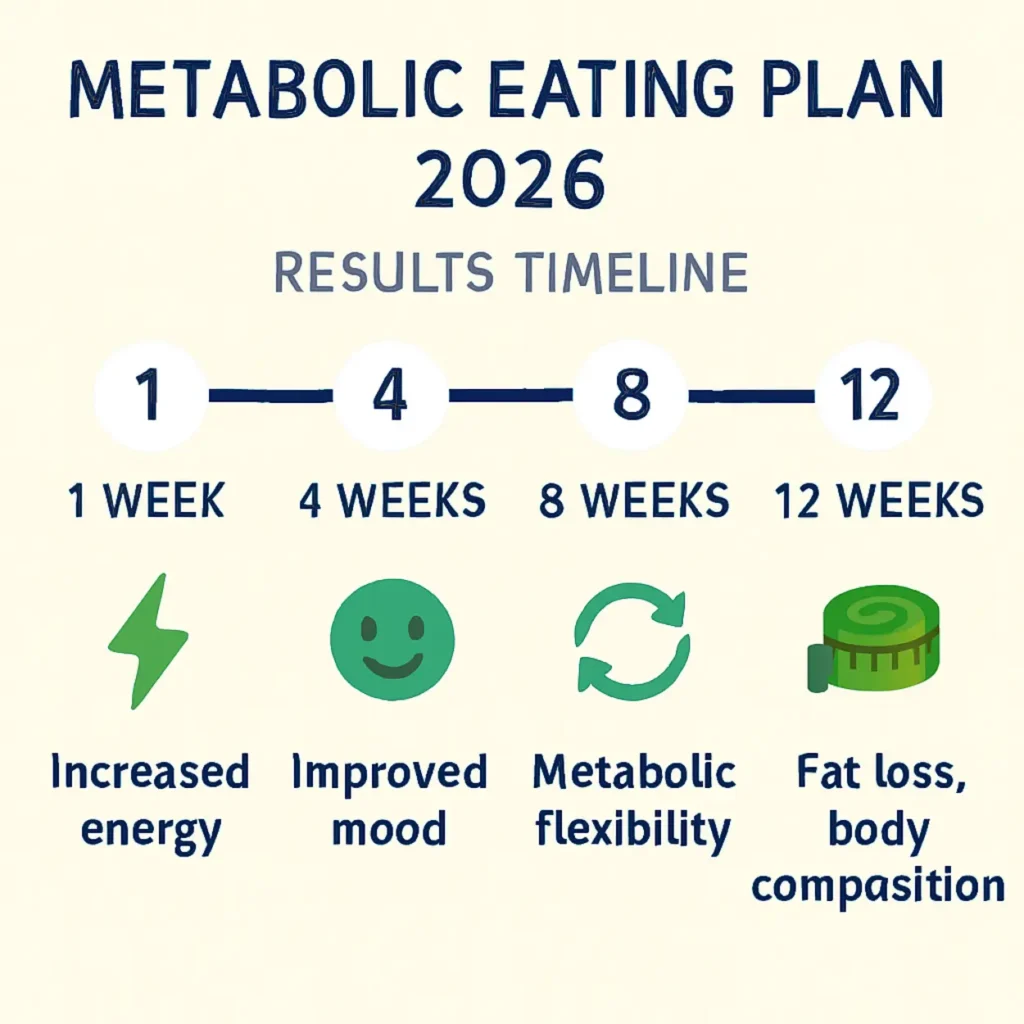
Beyond 8 Weeks: The metabolic eating plan 2026 becomes your sustainable lifestyle rather than a temporary diet. Metabolic flexibility typically develops over 8-12 weeks—be patient with the process.
Remember with the metabolic eating plan 2026, you’re not just losing weight. You’re rebuilding your metabolic health from the ground up. That takes time, but the results last a lifetime.
The metabolic eating plan 2026 offers what diet culture never could: lasting transformation without deprivation. Your flexible, energized, metabolically healthy future starts with implementing the metabolic eating plan 2026 strategies today.
Ready to transform your metabolism? Start implementing the metabolic eating plan 2026 strategies today. Your flexible, fat-burning, energized future self is waiting.
FAQs About the Metabolic Eating Plan 2026
Q1: How long does it take to see results with the metabolic eating plan 2026?
Most people begin noticing improvements in energy and reduced cravings within 2-4 weeks of starting the metabolic eating plan 2026. However, full metabolic flexibility—where your body efficiently switches between fuel sources—typically develops over 8-12 weeks of consistent practice with the metabolic eating plan 2026. Studies show measurable improvements in insulin sensitivity and fat oxidation markers appear around the 6-week point when following the metabolic eating plan 2026. Be patient with the process; you’re retraining metabolic pathways that may have been dysfunctional for years.
Q2: Can I follow the metabolic eating plan 2026 if I have diabetes or insulin resistance?
Yes, the metabolic eating plan 2026 can be particularly beneficial for managing diabetes and insulin resistance. The emphasis on nutrient timing, fiber-rich foods, and balanced macronutrients in the metabolic eating plan 2026 helps stabilize blood sugar levels. Research shows that people with pre-diabetes following metabolic flexibility protocols similar to the metabolic eating plan 2026 experienced significant HbA1c reductions and improved insulin sensitivity. However, always consult your healthcare provider before making dietary changes, especially if you’re taking diabetes medications that may need adjustment as your metabolic health improves with the metabolic eating plan 2026.
Q3: Do I need to count calories on the metabolic eating plan 2026?
Not necessarily. While being calorie-aware is helpful, the metabolic eating plan 2026 emphasizes food quality, nutrient timing, and listening to hunger cues rather than strict calorie counting. When you eat nutrient-dense whole foods that support metabolic flexibility and gut health as recommended in the metabolic eating plan 2026, your body’s natural appetite regulation tends to normalize. Many people find they naturally eat appropriate portions without tracking when following the metabolic eating plan 2026. That said, if you’re not seeing results after 4-6 weeks on the metabolic eating plan 2026, tracking temporarily can help identify issues.
Q4: What’s the difference between the metabolic eating plan 2026 and intermittent fasting?
Intermittent fasting (IF) focuses primarily on when you eat, typically through extended fasting periods. The metabolic eating plan 2026 incorporates time-restricted eating (similar to IF) but places equal emphasis on what you eat—specifically nutrient-dense foods that support gut health and metabolic flexibility. Additionally, the metabolic eating plan 2026 doesn’t require extreme fasting windows; a moderate 10-12 hour eating window provides benefits without the stress of prolonged fasting. Think of IF as one tool within the broader metabolic eating plan 2026 toolbox.
Q5: Will the metabolic eating plan 2026 work if I’m vegetarian or vegan?
Absolutely. The metabolic eating plan 2026 principles work beautifully with plant-based diets. Focus on plant proteins (legumes, tofu, tempeh, seitan), plenty of fiber-rich vegetables and fruits, whole grains, nuts, and seeds. The gut health component of the metabolic eating plan 2026 is actually easier on plant-based diets due to higher fiber intake. Plant-based followers of the metabolic eating plan 2026 should pay extra attention to protein distribution (getting 20-30g at each meal) and may benefit from supplementing vitamin B12. Studies show plant-based metabolic approaches like the metabolic eating plan 2026 deliver excellent results for weight loss and metabolic health improvement.
Inspirational Quotes
“How is metabolic flexibility achieved? The physical practices in this chapter—getting your micronutrient count up by eating 800 grams of fruits and vegetables per day and monitoring your protein intake—promote metabolic flexibility by packing your primary diet with healthy whole foods, leaving less room for the high-sugar, highly processed foods that send your blood sugar on an unhealthy roller-coaster ride.”
— Kelly Starrett, Built to Move
“The future is less about restriction and more about rhythm: eating in sync with circadian biology and metabolic needs, to support long-term resilience rather than short-term weight loss.”
— Murphy Richter, Registered Dietitian
“The struggle you are in today is developing the strength you need for tomorrow.”
— Robert Tew
References
- Food Institute. (2025). “Diet Trends to Watch in 2026: Metabolic Eating, Gut Health Prioritized.” https://foodinstitute.com/focus/diet-trends-to-watch-in-2026-metabolic-eating-gut-health-prioritized/
- MDPI Nutrients. (2024). “Dietary Strategies for Metabolic Syndrome: A Comprehensive Review.” https://pmc.ncbi.nlm.nih.gov/articles/PMC7600579/
- BMC Medicine & Science. (2023). “Dietary patterns and cardiometabolic health: Clinical evidence and mechanism.” https://onlinelibrary.wiley.com/doi/10.1002/mco2.212
- MDPI Nutrients. (2024). “Comprehensive Strategies for Metabolic Syndrome.” https://pmc.ncbi.nlm.nih.gov/articles/PMC11206163/
- Clean Eating Magazine. (2021). “Keto 2.0: A Low-Carb Meal Plan to Achieve Metabolic Flexibility.” https://www.cleaneatingmag.com/meal-plans/keto-2-0-a-low-carb-meal-plan-to-achieve-metabolic-flexibility/
- BetterMe World. (2025). “Metabolic Flexibility Diet: What To Eat, And Why.” https://betterme.world/articles/metabolic-flexibility-diet-what-to-eat-and-why/
- UCLA Health. (2021). “Gut microbiome makeup can determine ability to lose weight.” https://www.uclahealth.org/news/article/gut-microbiome-makeup-can-determine-ability-to-lose-weight
- Cambridge University Press. (2024). “Exercise, nutrition, and medicine timing in metabolic health.” https://www.cambridge.org/core/product/identifier/S0029665124007493/type/journal_article
- ZOE Health. (2025). “Gut Health and Weight Loss: Do Gut Bacteria Play a Role?” https://zoe.com/learn/gut-health-and-weight-loss
- Science Daily. (2026). “Scientists tested intermittent fasting without eating less.” https://www.sciencedaily.com/releases/2025/12/251228020018.htm
More Read: Personalized Nutrition Plans: AI-Driven Weight Loss Strategies 2025